|
|
|
|
Mekong Ganga Quick Impact Projects: Unlocking a stream of developmental partnership (The article was originally published in Global New Light of Myanmar) |
By Abhay Thakur, Ambassador of India to Myanmar
The Ganga is the sacred river of India, whose banks, central to many Hindu epics, have nurtured and nourished ancient Indian culture and tradition over millennia. The Mekong is similarly revered in folk traditions of the Mekong Region and its people as “the River of the Lord Buddha”. These rivers flow as living symbols of faith, purity, and sustenance for millions, venerated as sacred, shaping the imagination and livelihoods of the thriving communities along their banks. Just as these two sacred rivers have sustained civilizations for centuries through agriculture, fisheries, and trade, the Mekong Ganga Cooperation (MGC) initiative between India and five ASEAN countries (Cambodia, Lao PDR, Myanmar, Thailand and Vietnam) draws its sustenance from the same spirit.
|
| Read More |
|
|
|
Key Developments in the Global South |
|
|
|
|
|
|
|
|
|
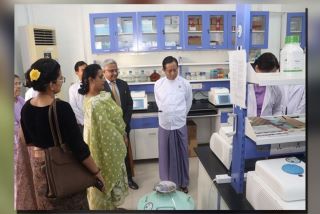
A commemorative ceremony marking the completion and commencement of two research and technology projects under the Mekong-Ganga Cooperation (MGC) framework, aimed at developing Myanmar's agricultural sector, was held at the Centenary Hall of the University of Agriculture (Yezin). The projects include the "Drying Machine and Drying Facility Project" and the "ACARE Knowledge Repository Project". The ceremony was attended by Deputy Minister for Agriculture and Irrigation Dr Tin Htut, Mr Abhay Thakur, Ambassador of India to Myanmar, officials from the Ministry of Foreign Economic Relations and Investment, directors-general of relevant departments, invitees, the Rector and professors of the University of Agriculture, associate professors and researchers, and postgraduate students. During the event, Deputy Minister Dr Tin Htut emphasised the importance of sustaining and further developing the completed projects.
|
| Read More |
|
|
|
 |
|
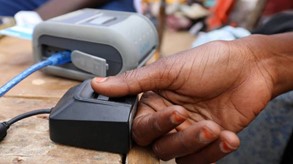
Zambian authorities have assured that citizens will begin receiving their national digital ID cards by the close of the current year. The information was disclosed recently by Percy Chinyama, National Coordinator of the SMART Zambia Institute, the government agency overseeing the country’s digital transformation journey. The digital ID rollout will be a milestone in the implementation of the Digital Zambia Acceleration Project (DZAP), the official said, adding that much progress has already been recorded, as evidenced by the digitization of several public sector services.
|
| Read More |
|
|
|
 |
|
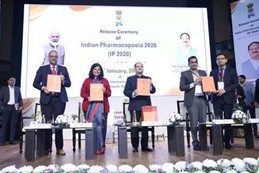
The event noted that India, which was ranked 123rd globally in terms of contributions to the World Health Organization’s pharmacovigilance database during 2009-2014 has now risen to 8th position worldwide in 2025. Commending the IPC and the PvPI team for this significant achievement, Nadda said that the strengthened pharmacovigilance ecosystem reflects India’s sustained commitment to patient safety, quality assurance, and robust regulatory vigilance. The minister underscored the first-time inclusion of 20 blood component monographs pertaining to transfusion medicine in the drug compendium, which is in accordance with the provisions of the Drugs and Cosmetics (Second Amendment) Rules, 2020. |
| Read More |
|
|
|
 |
|
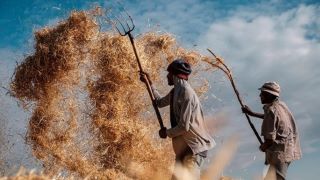
Ethiopia’s Ministry of Agriculture of has announced the exemption of more than 550 types of farm machinery from customs duties and import taxes, a move aimed at modernizing the sector and increasing productivity amid mounting challenges facing agriculture in the country. Minister of Agriculture Adeso Ariga said the government has begun importing agricultural machinery duty-free and making it available to farmers through installment-based payment schemes, helping reduce reliance on traditional farming methods while improving productivity and crop quality. |
| Read More |
|
|
|
 |
|
Zabihullah Mujahid, the Taliban’s chief spokesperson, said the group values its relations with India and wants to expand cooperation, particularly in healthcare and commerce. Mujahid thanked India for its humanitarian assistance, including the supply of vaccines, medicines and food aid, and said Afghanistan’s needs require sustained dialogue and stronger bilateral relations. |
| Read More |
|
|
|
 |
|
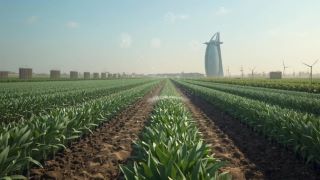
The United Arab Emirates has launched an AI-driven ecosystem to help climate-vulnerable agricultural regions adapt to increasingly volatile weather. The initiative reinforces the country’s ambition to position itself as a global hub for applied AI in climate resilience and food security. Unveiled in Abu Dhabi, the programme builds on a US$200m partnership with the Gates Foundation announced during COP28. It reflects a shift from climate pledges toward deployable technology as droughts, floods and heat stress intensify pressure on agriculture, particularly in the Global South. At the core is an integrated ecosystem linking scientific research, AI model development and digital advisory tools with large-scale deployment. Rather than isolated pilots, the programmes are designed to translate data into practical tools used directly by governments, NGOs and farmers.
|
| Read More |
|
|
|
 |
|
The government of Senegal has approved the studies conducted by the United Nations Food and Agriculture Organization (FAO) on the National Cattle Identification and Tracking System (SNITB) following a national workshop, in Diamniadio, Senegal. The workshop, which brought together public authorities, private sector stakeholders, professional organizations, and technical partners, was chaired by Mabouba Diagne, Minister of Agriculture, Food Sovereignty, and Livestock. This event marked a decisive turning point in the fight against cattle theft. The focus was on innovation and the involvement of technology start-ups to tackle this issue, which is undermining the livelihoods of millions of families in West Africa. In Senegal, annual losses are estimated at two billion CFA francs (approximately USD 3.2 million). Cattle theft represents a major economic and social threat to livestock farmers. |
| Read More |
|
|
|
|
 |
|
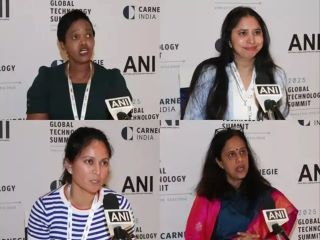
Stakeholders from the Global South discussed the future of Artificial Intelligence, its societal impact, and the collaborative opportunities emerging across continents. At the Carnegie Global Technology Summit Innovation Dialogue 2025, voices from Africa and India highlighted shared challenges, unique advantages, and the urgent need to build inclusive, scalable AI ecosystems.
|
| Read More |
|
|
|
|
 |
|
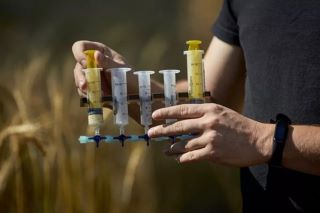
The Asian Development Bank (ADB) has approved a $50 million loan to JSC Rustavi Azot, also known as Rustavi Azot Indorama, to help modernize its fertilizer production facilities in Georgia. The financing will be used to introduce energy-efficient technologies aimed at reducing emissions and improving industrial efficiency. The project focuses on lowering energy consumption in fertilizer manufacturing while supporting more sustainable agricultural practices. ADB stated that the initiative aligns with Georgia’s Vision 2030 development agenda and its Nationally Determined Contribution commitments on climate action. |
| Read More |
|
|
|
|
 |
|
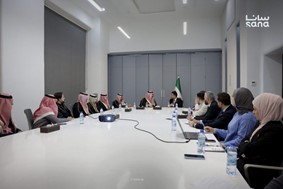
Health Minister Musab Al-Ali discussed with Sultan al-Morshed, CEO of the Saudi Development Fund, and his accompanying delegation financing and support for vital health projects as part of Syria’s 2026–2028 health plan. The talks centered on upgrading health facilities, boosting operational capacity, and tackling service delivery challenges. The Saudi Development Fund, a government entity, offers concessional loans to fund development projects in developing countries, aiming to foster economic growth and improve living standards. |
| Read More |
|
|
|
|
 |
|
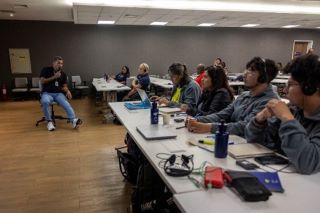
Athletes and coaches from 13 emerging National Paralympic Committees (NPCs) spanning Asia and the Americas benefitted from world class coaching, mentoring and facilities courtesy of the International Paralympic Committee’s (IPC) Mentoring Hubs initiative. Representatives from the NPCs of Bolivia, Cuba, Dominican Republic, Grenada, Guatemala and Paraguay participated in a joint Mentoring Hub in November 2025 involving the Americas Paralympic Committee and NPC Brazil. As part of the IPC’s commitment to strengthening Para sport globally through the Sport for Mobility programme, the Mentoring Hubs initiative gives leading NPCs the opportunity to share their expertise and host athletes and coaches from emerging NPCs to accelerate development. The aim is to serve as a vibrant training ground where knowledge is exchanged, skills are sharpened, and the next generation of Para athletes are empowered to reach their full potential. |
| Read More |
|
|
|
|
 |
|
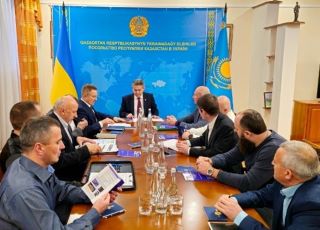
Ukraine hosted a roundtable titled “Opportunities for Cooperation between Kazakhstan and Ukraine in the Agribusiness Sector.” The event was organized by the Ukrainian League of Machine-Builders and Employers (Ukrmashbud) together with the Embassy of Kazakhstan, bringing together leaders of major companies and agricultural experts. Opening the event, Kazakhstan’s Ambassador Tolezhan Barlybayev noted the strong potential for cooperation between the two countries in agribusiness. He emphasized that in the President’s September Address, the development of the agricultural sector was identified as one of the key national priorities, creating new opportunities for collaboration with Ukrainian partners. |
| Read More |
|
|
|
|
 |
|
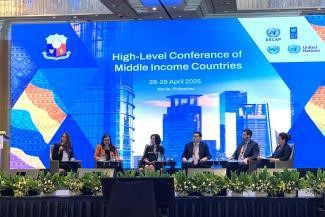
According to the World Bank’s 2025-2026 list, based GNI per capita, only two Asia-Pacific countries are classified as low-income. The rest are middle-income countries (MICs) or high-income economies. Especially, MICs in both regions have emphasized the unique value of their experience as both recipients and providers of technical assistance and their commitment to cooperation and multilateralism. A strong presence of MICs enables the regions to have a shared vision for international development partnerships. |
| Read More |
|
|
|
|
 |
|
The Egyptian Agency of Partnership for Development (EAPD) said that it continued, in 2025, to implement programs and projects aimed at strengthening South–South Cooperation and capacity building in Africa and the Global South, in line with directives from the political leadership to consolidate Egypt’s role in supporting sustainable development. The agency added that these efforts reflect the humanitarian dimension of Egyptian diplomacy and support the Sustainable Development Goals as well as Africa’s Agenda 2063. |
| Read More |
|
|
|
|
|
|